
The engineering behind the outcome.
Project experience across machinery, water, process safety and facilities. Client names are withheld for commercial confidentiality; the focus is the operating challenge, engineering scope and documented handover.
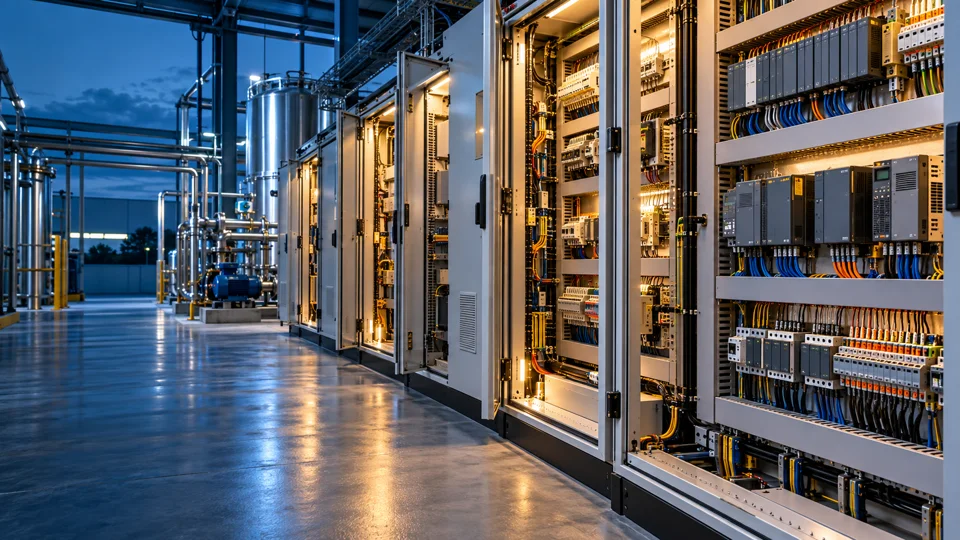
Production machine installation, commissioning and handover
The situation
A new production machine arrived from an overseas supplier with documentation in the vendor's format, no local commissioning support and a fixed plant shutdown window. Power, control integration, safety circuits and operator training all had to be completed before the line restarted.
What we did
Reviewed the supplied electrical drawings and I/O schedule before delivery, then supervised the electrical installation, power distribution and field wiring. Configured the drives, verified every I/O point against the schedule, proved the safety circuits and interlocks, and tuned the speed, tension and sequence control against the actual product. Ran a structured commissioning checklist with the operations team, then produced the as-built drawings, program backups and an operator handover document.
Outcome
The machine was handed over inside the shutdown window with a complete FAT/SAT record, restored program backups held on site, and maintenance staff able to clear common faults without calling the supplier overseas.
Explore related project capabilityAutomating a manual agricultural process line
The situation
A processing line was being run manually: start/stop by operator judgement, no recipe control, inconsistent throughput between shifts, and no record of what had been processed. Seasonal volume peaks made the manual approach a bottleneck, and product quality varied with whoever was on shift.
What we did
Mapped the existing process into a defined sequence with the operators, then designed and built the control solution around it: PLC and HMI with recipe selection, VSD-driven conveying and dosing, level, flow and temperature instrumentation, and interlocks so the line cannot run outside safe conditions. Added automatic changeover between product types, alarm handling with clear operator messages, and batch logging to a database for traceability.
Outcome
Throughput became repeatable across shifts, product quality stopped depending on operator experience, and every batch now has a logged record of setpoints, run time and alarms. Manual handling on the line was substantially reduced.
Explore related project capabilityFixed gas detection and ventilation interlock system
The situation
A facility handling compressed and process gases needed continuous detection with a defined, verifiable response: local warning, ventilation control, controlled shutdown of the gas supply, and a record that the system had been tested. Ad-hoc portable detectors were not sufficient for the operating risk or for compliance records.
What we did
Defined detector types, quantities and placement against the gases present and the room air movement. Engineered the controller and field wiring, integrated the detection layer with ventilation and with the solenoid isolation of the gas supply, and built a two-stage alarm philosophy: alert at the first threshold, controlled shutdown and full extraction at the second. Configured beacons and sounders, brought the status into the site supervisory system, and commissioned every detector with calibration gas, documenting the response of each device and each interlock.
Outcome
The facility gained a documented detection-to-shutdown chain that has been proven end to end, with logged events, a calibration schedule and clear alarm response instructions for staff.
Explore related project capabilityPLC and SCADA control for a sewage pumping network
The situation
Pumping stations were operating on ageing local control with limited visibility. Faults were discovered when an overflow or a complaint was reported rather than when the fault occurred, duty pumps were wearing unevenly, and there was no usable history for maintenance planning.
What we did
Engineered PLC-based control for wet-well level with duty/standby/assist rotation, high-level and dry-run protection, and pump fault handling that keeps the station running on the healthy pump. Added level and flow instrumentation with backup float protection, and built a SCADA layer with station overview screens, trending, event history and alarm escalation to on-call staff. Configured secure remote access so a fault can be assessed before anyone is dispatched, and kept a full local manual mode so the station remains operable if communications are lost.
Outcome
Abnormal conditions now raise an alarm before they become an overflow, pump run hours are balanced and recorded, and maintenance is planned from trends rather than from callouts. Unnecessary after-hours site visits dropped because the fault is visible remotely.
Explore related project capabilityMachine condition monitoring integrated with the building BMS
The situation
Critical rotating plant was maintained on a fixed time schedule. Bearing and motor failures still occurred between services, and the facilities team, who already watched the building BMS all day, had no visibility of machine health because it sat in a separate, unconnected system.
What we did
Fitted smart sensors to the critical motors and pumps to capture vibration, temperature and run-state, and collected drive data already available over the industrial network. Established baselines per machine, set warning and alarm thresholds from those baselines rather than generic values, then integrated the condition data into the existing BMS over a standard protocol so it appears alongside the plant the facilities team already monitors. Built trend dashboards and a monthly exception report highlighting only the assets that are drifting.
Outcome
Developing faults are now visible weeks before failure, maintenance is scheduled against actual condition instead of a calendar, and the facilities team manages machine health from the screen they were already using, with no new system to learn and no extra licence.
Explore related project capabilityObsolete drive and PLC migration without a line rebuild
The situation
A production line depended on drives and controllers no longer supported by the manufacturer. Spares were being sourced from the second-hand market at rising cost, and a single failure risked an extended outage. The process knowledge built into the existing program over many years could not be lost in the change.
What we did
Completed an obsolescence and spares review across the line to rank assets by risk and lead time. Recovered and documented the existing control logic and tuning before touching anything, then designed a staged migration (current-generation drives and controller, revised panel layout, updated protection and cabling) that could be executed across planned shutdown windows rather than in one shutdown. Rebuilt the logic on the new platform with the original process behaviour preserved, tested it offline, then commissioned and tuned on the running process. Delivered as-built drawings, backups and a spares list at the end of each stage.
Outcome
The line moved to a supportable platform with parts available locally, without an emergency replacement and without relearning the process. Energy performance and control response also improved with the newer drive generation.
Explore related project capabilityLocal Australian support for an overseas machine builder
The situation
An overseas machine builder had equipment installed with Australian customers but no engineer in the country. Faults were being handled across time zones by email and video call, commissioning trips were expensive, and end customers were losing production while waiting for the supplier's working hours.
What we did
Acted as the local engineering representative: attended site for installation and commissioning, diagnosed control, drive and network faults on the ground, and worked directly with the builder's engineers in their own program and documentation. Handled Australian electrical compliance and site requirements, and trained the end customer's maintenance team in first-line fault clearing.
Outcome
Response time to a fault dropped from days to hours, the builder avoided flying engineers to Australia for routine work, and the end customer gained a local contact who understands both the machine and Australian site requirements.
Explore related project capabilityBring us the operating challenge.
Tell us about your site, equipment and intended outcome. We will help define a practical engineering scope.